Boulder Retaining Walls
Large natural boulders, often a ton or more each, placed by machine to hold steep banks, wooded slopes and big grade changes with a rugged, natural look.
When a Boulder Wall Is the Right Call
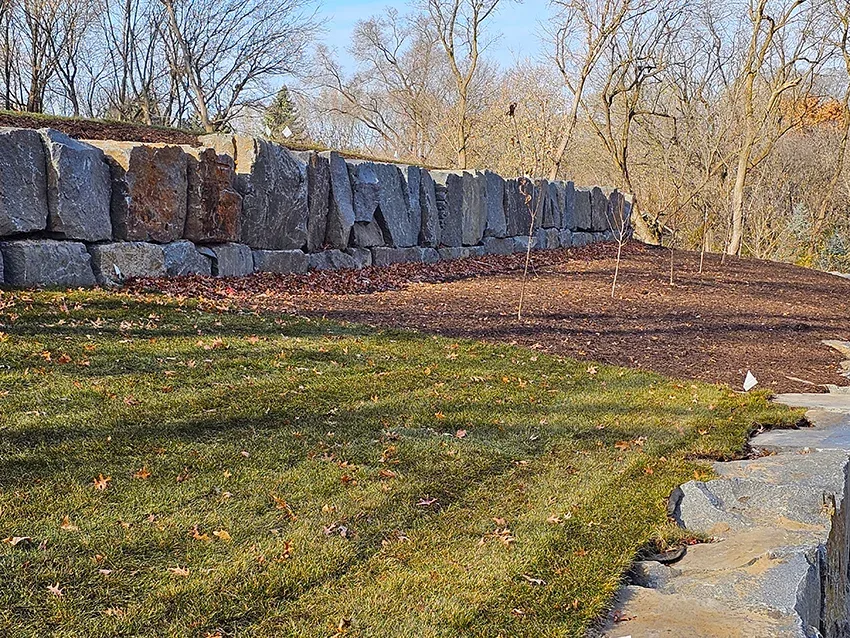
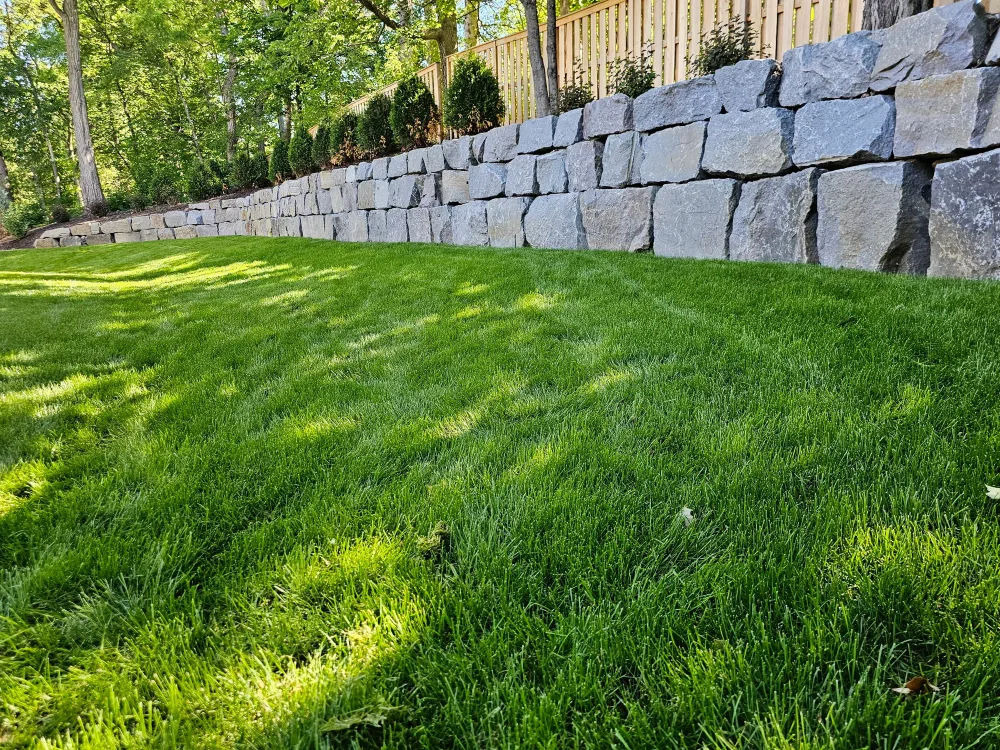
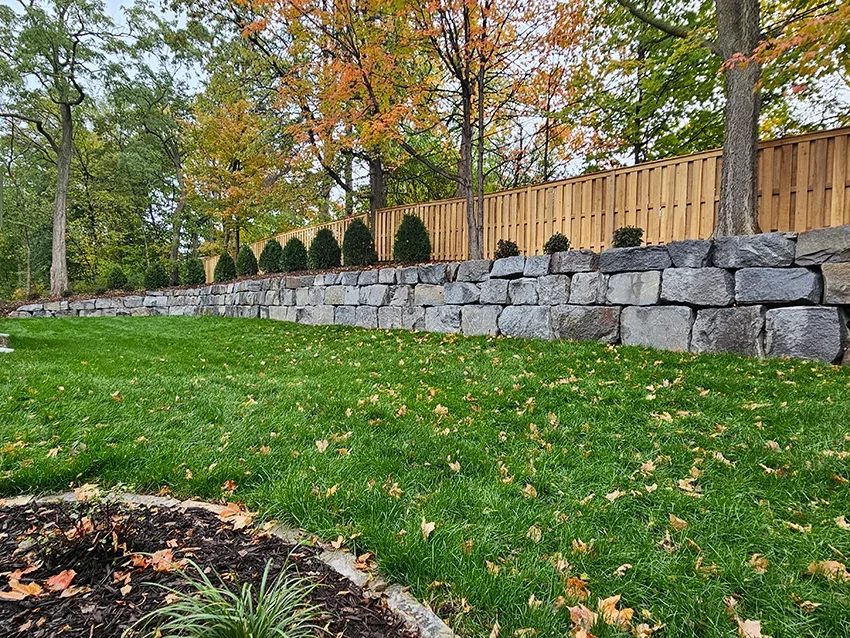
A boulder retaining wall uses large, irregular stones instead of cut blocks. The weight of each boulder is what holds the soil back, so a few big stones can support a grade change that would take many courses of smaller block.
Boulder walls suit wooded lots, long natural slopes, the back of a property where the ground drops off, and any place where a rustic look fits better than tight lines. They also work well for tall grade changes because each course adds a lot of height at once.
The trade-off is footprint and precision. Boulders are deep from front to back, so the wall takes more room, and the face has natural gaps and irregular joints. For a straight, finished edge next to a patio or driveway, cut granite is usually the better fit.
Boulder Walls by the Numbers
General characteristics of boulder walls. Stone size and wall height are set for each site.
| Stone | Natural boulders, rounded or angular, typically 2 to 4 ft across |
|---|---|
| Weight | A 3 ft boulder can weigh well over a ton, so each stone is set with an excavator |
| Footprint | Deeper than block walls; plan room for the stone depth plus drainage stone behind it |
| Embedment | The first course is buried, commonly about 10 percent of the wall height and at least several inches |
| Gaps | Irregular joints; smaller chinking stones or plantings fill openings |
| Near water | Stacked boulders below the ordinary high water level count as a retaining wall and need a Minnesota DNR permit |
What Makes a Boulder Wall Stable
Size the Base Course
The largest boulders go on the bottom. A wide, heavy base course resists sliding and gives the upper stones something solid to bear on.
Bury the First Course
Setting the bottom boulders partly below grade keeps the toe of the wall from kicking out when the soil behind it pushes.
Lock Each Stone
Each boulder is rotated until it sits on at least two stones below and leans back into the slope. A stone that rocks is reset, not shimmed.
Batter Into the Hill
Each course steps back toward the slope so the wall leans into the soil it holds.
Fill Behind, Not Just Between
Drainage stone goes behind the boulders so water has a path out; soil packed directly against the stones holds water.
Plant the Pockets
Gaps between boulders can be planted with ground covers or perennials to soften the face and help hold surface soil.
How We Set a Boulder Wall
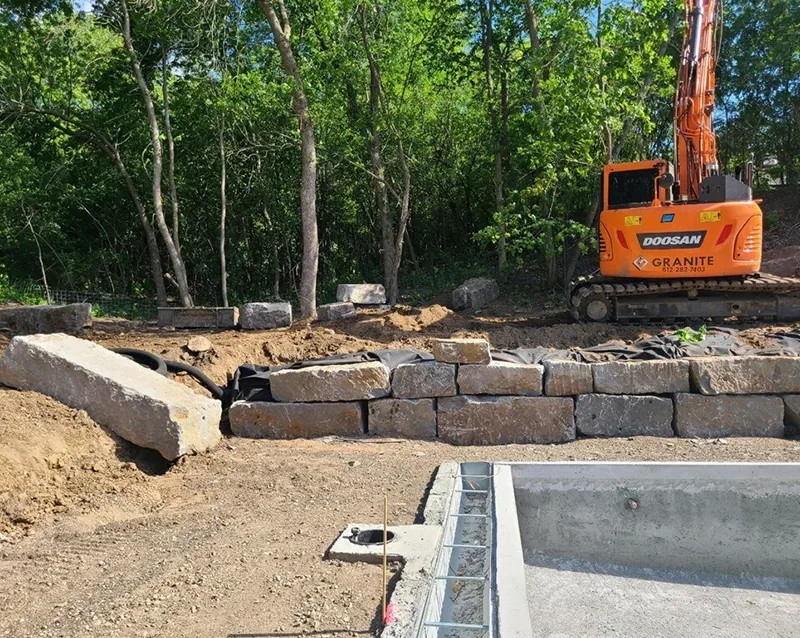
Boulder walls are machine work. Stones are delivered and staged near the wall, then picked and placed one at a time with an excavator. Because each stone is unique, the operator chooses the next boulder by shape, test-fits it, and rotates it until it locks in.
Before any digging, utility lines are located through Gopher State One Call, and the access route for trucks and equipment is planned so lawns, driveways and trees can be protected. On tight lots, smaller boulders or a different material may be the practical choice.
Near lakes and rivers, boulder work has extra rules. The Minnesota DNR treats rows of stacked boulders at the water as a retaining wall that requires a permit, while properly built riprap may not. See shoreline restoration and riprap if your project is at the water's edge.
Boulder Wall Details Worth Reviewing
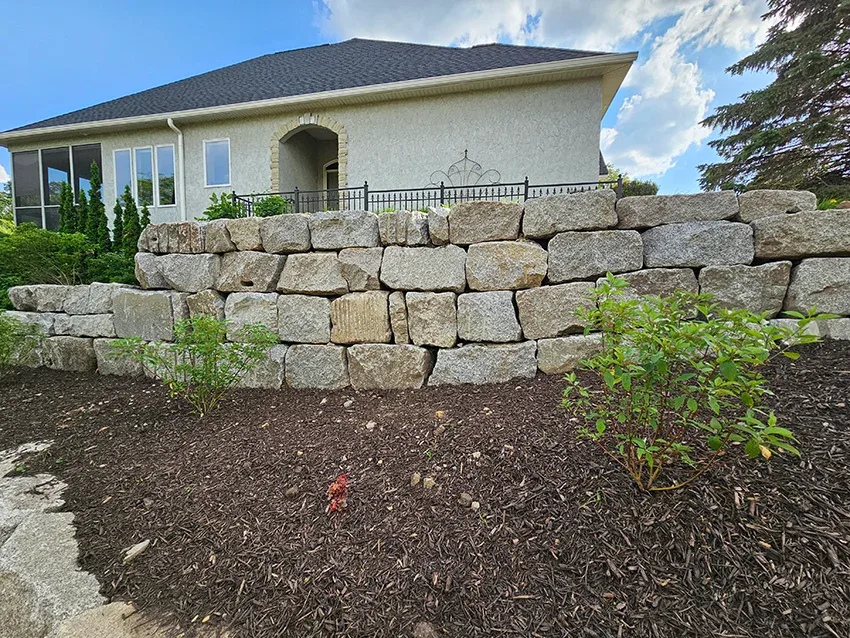
A site-specific plan clarifies wall placement, drainage, access, materials, and the work required before excavation begins.
Call for a Free EstimateQuestions About Boulder Retaining Walls
How much does a boulder retaining wall cost?+
Price depends mostly on how many tons of stone the wall needs, trucking distance, site access for heavy equipment, excavation and drainage. Taller walls use larger boulders and more tonnage per foot. We give a free estimate after seeing the site.
How big are the boulders in a retaining wall?+
Wall boulders are usually 2 to 4 feet across, with the largest stones in the bottom course. A 3-foot boulder can weigh more than a ton, which is why they are set with an excavator.
Do boulder walls need drainage?+
Yes. Gaps between boulders let some water through, but soil packed tight behind them can still hold water and freeze. Clean drainage stone behind the boulders and a planned outlet keep pressure off the wall.
Can I build a boulder wall at my lakeshore?+
Stacked boulders below the ordinary high water level are treated as a retaining wall by the Minnesota DNR and need a permit. Riprap that meets DNR conditions can often go in without one. We review the rules for your shoreline before planning the work.
How much room does a boulder wall need?+
More than a block wall. Boulders are deep from front to back, and there must be room for drainage stone behind them and for an excavator to reach the work. Narrow side yards may suit a different material.
Can a boulder wall be terraced?+
Yes. Two or more shorter boulder walls with planting beds between them are common on steep slopes. Each upper wall needs to be set far enough back that it does not load the wall below.
See If Boulders Fit Your Slope
Send us the location and a rough height for the grade change. We will check access, stone size and drainage on site and give you a free estimate.